
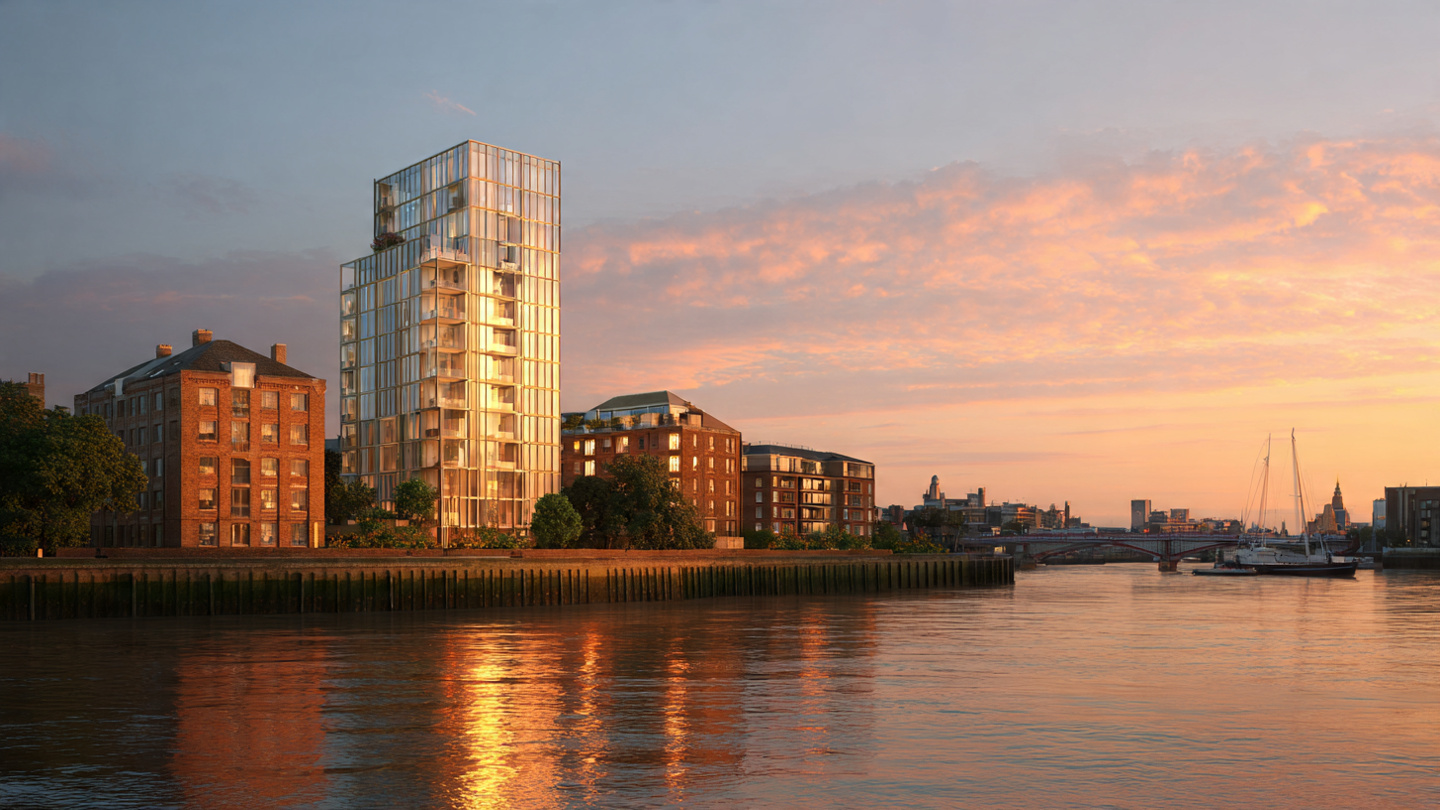
London’s waterfront homes are sending mixed signals about the health of the UK housing market. Along the River Thames, luxury apartments and social housing sit side by side, but their fortunes could not be more different.
On one hand, the market for expensive riverside homes is showing renewed confidence. On the other, social tenants face uncertain futures as regeneration projects push forward. These conflicting stories reveal a property market divided by price, location, and regulation.
The Luxury Market: Confidence Returns
After a period of uncertainty, prime London’s high-end property market is showing signs of recovery. The number of homes priced at £2 million or more in Prime Central London rose by 2.7% in the first three months of 2026.
These expensive homes now make up 35.5% of all available properties in central London’s most desirable areas. This is a clear reversal from late 2025, when high-end stock levels had fallen by 9.3%.
Where Are Prices Rising?
Regent’s Park saw the biggest jump in luxury listings, with a 21.2% increase in homes priced above £2 million. Marylebone followed with a 17.4% rise, and Victoria recorded a 9.3% increase.
Mayfair continues to dominate the luxury market. Nearly four out of every five homes listed there – 79.5% – are priced at £2 million or more. Knightsbridge follows at 64.9%, and Belgravia at 57.6%.
Damien Jefferies, founder of Jefferies London, told The Intermediary: “Having seen high-end stock levels fall during the final quarter of last year, our latest research suggests there is renewed confidence on the side of prime London sellers as we move through the opening months of 2026”.
The Council Tax Surcharge Has Not Deterred Sellers
Last year’s Autumn Budget introduced a new council tax surcharge on homes worth over £2 million. Many experts thought this would stop owners from putting their luxury homes up for sale.
But the opposite has happened. Sellers appear confident that demand for prime London property remains strong. Jefferies added: “While buyers remain selective, there is still a great deal of appetite for high-quality homes across prime central London”.
The Flat Market: A Different Story
Not all riverside properties are doing well. According to property experts, London has effectively become “two separate markets”: houses and flats.
The flat market has been depressed since 2015. Nicholas Austin, branch manager at RiverHomes, told This is Money that multiple factors are to blame:
- Higher stamp duty costs
- Extra taxes for foreign investors
- Increased taxes for landlords
- Falling demand for flats after the Grenfell Tower fire
Austin added that recent government policies have only made things worse. He said: “Rachel Reeves’s tax rises and the introduction of the Renters Rights Act merely added more nails into an overnailed coffin”.
House vs Flat Price Forecast
Looking ahead, Austin predicts the gap between house and flat prices will become “an unfathomable chasm”.
His forecast for the next ten years:
- House prices in London will grow by 25%
- Flat prices will rise by just 5%, if at all
This means investors and homeowners looking for riverside flats may see very little return on their investment over the next decade unless major policy changes happen.
Regeneration Areas: Hope for Growth
While central London’s flat market struggles, riverside regeneration zones are offering better opportunities. These areas are attracting buyers priced out of more expensive neighborhoods.
Poplar Riverside
East London’s Poplar area is undergoing a £2 billion transformation. Developer Berkeley is building 2,800 new homes across a 20-acre riverside site.
The area’s population is expected to grow by 41% by 2030 – much higher than central London’s 7% growth forecast. Young professionals are driving this change, with 47% of residents under age 40.
Key features of the Poplar regeneration include:
- A 2.5-acre park along the river
- A 500-meter riverside walkway
- A new commercial hub with shops and restaurants
- 15 resident facilities including a swimming pool and co-working space
Prices start from £491,000 for a one-bedroom flat. Two-bedroom apartments are available from £587,000.
Woolwich
South-east London’s Woolwich is another riverside area on the rise. The Elizabeth Line now serves the neighborhood, making it easier to reach central London.
Developer Re:shape recently received permission to build nearly 1,500 new homes at Electric Works. The £425 million project will include student rooms, co-living spaces, and apartments. About 40% of these will be affordable homes.
Average property prices in Woolwich remain relatively affordable:
- Flats sell for around £390,000
- Terraced houses cost about £460,000
Rachel Bird, head of Foxtons’ Woolwich office, told the London Evening Standard: “There is now a lot more desirability about Woolwich”.
Canada Water
Just across the river from Canary Wharf, Canada Water is in the early stages of a £4 billion redevelopment.
Over the next 10 to 15 years, the 53-acre project will deliver:
- 3,000 new homes
- One million square feet of shops and restaurants
- Cultural amenities
- 130 acres of parks and woodland
The first residents will soon move into The Founding, a 35-storey tower by Canada Water Station. However, prices are not cheap – apartments start at £695,000.
Michael Petherbridge, area manager at Oliver Jacques estate agents, said: “It is a phenomenal investment opportunity. The surrounding area has a lot of opportunity to get onto the ladder or move up it”.
The Social Housing Crisis
Not everyone benefits from riverside regeneration. Some residents are being displaced to make way for new luxury developments.
Carnwath Road Dispute
In South Fulham, residents of a riverside social housing block face being moved into smaller homes. Developer Rockwell is building 269 new homes on the former Hurlingham Retail Park.
The existing blocks at 1-3 Carnwath Road will be demolished. Tenants have been offered flats in the new development, but not all are happy.
David McGinty, 67, has lived at One Carnwath Road for 26 years. He told the Uxbridge Gazette that he and his neighbors are being shifted to “a shoebox with the poor doors”.
McGinty acts as a voluntary carer for two elderly residents. He fears the disruption caused by the development will damage the tight-knit community he has been part of for more than two decades.
The Mast Quay Demolition
In Woolwich, a more extreme case shows how riverside development can go wrong. Greenwich Council has ordered the demolition of the Mast Quay development – a £36 million riverside tower block.
The council called it a “mutant development” and a “blight on the landscape”. The problem? The finished building did not match the approved plans.
Deviations from the original design included:
- Towers that look “more solid and bulky”
- No landscaped roof gardens or children’s play areas
- Smaller balconies and windows
- No disabled parking or wheelchair access
Local Labour councillor Aidan Smith said: “Instead of hundreds of beautiful riverside apartments, what we have is a mutant development”.
The developer, Comer Homes Group, has one year to demolish the building. At least 78 flats are currently occupied, leaving residents facing an uncertain future. The developer has said it will appeal the decision.
The End of Small Landlords
Another pressure on London’s housing market is the expected disappearance of small landlords. Property expert Nicholas Austin warned that the Renters Rights Act will “eradicate” small independent landlords within the next six to twelve months.
Small landlords – those with just one or two properties – operate on very small profit margins. If a tenant stops paying rent, they cannot afford the mortgage payments.
Austin explained: “The Act will have the exact opposite effect of what this government intended. There will be a reduction in the number of properties, which will see rents increase”.
This is bad news for renters looking for riverside flats. Fewer properties available for rent will push prices even higher.
Bidding wars between tenants have now been banned. But agents are responding by front-loading rents by up to 30%. This puts even more pressure on renters and on the already-stretched social housing system.
Expert Price Forecasts
Property firm Savills has released its official forecast for the prime housing market. The outlook is for a gradual recovery across London.
Prime Central London (PCL)
PCL property values fell by 4.8% in 2025. They are now 24.5% below their 2014 peak.
Savills predicts PCL will see a further small drop of 2.0% in 2026 before stabilizing. The five-year forecast to 2030 shows growth of just 8.1%.
This means a £5 million riverside apartment would add only £406,000 in value by 2030.
Outer Prime London
Areas just outside central London will perform slightly better. Savills expects zero change in 2026, followed by steady growth reaching 12.0% over five years.
Prime Regional Markets
Property outside London will see the strongest growth. Savills forecasts a 17.6% increase in prime regional property values by 2030.
Frances McDonald, director of research at Savills, said: “Despite global wealth continuing to grow, it remains reluctant to find a home in London in the current tax and regulatory environment”.
Why Riverside Property Still Has Value
Despite these mixed signals, riverside properties in London continue to command a premium. Prices are typically 10% to 50% higher than comparable inland homes.
What Makes Riverside Property Special
Riverside properties offer several advantages:
- Scarcity: Limited riverfront land restricts supply
- Global appeal: Waterfront real estate attracts international buyers
- Strong rental demand: Tenants pay premiums for views and location
- Lifestyle benefits: Open views, natural light, and riverside walks
Even in uncertain markets, these factors help riverside properties hold their value better than other homes.
Investment Tiers
According to Estate Agent Power, riverside properties fall into three price tiers:
- Prime Central (Zone 1): Chelsea, South Bank, Westminster – £1,200 to £2,500+ per square foot
- Established Districts (Zone 2-3): Battersea, Fulham, Canary Wharf – £700 to £1,200 per square foot
- Emerging Zones (Zone 3-5): Barking Riverside, Royal Docks – £400 to £700 per square foot
The best opportunities for growth are in emerging zones, where regeneration projects and new transport links are driving demand.
The Stag Brewery Lesson
The long struggle to develop the old Stag Brewery site in Mortlake shows how difficult riverside development has become.
Singaporean owners City Developments Limited paid £158 million for the 22-acre riverside plot in November 2015. They expected planning permission by 2018.
Instead, the process took nearly a decade and cost close to £10 million – far more than the original £3-4 million estimate.
The problem? Disagreements over affordable housing requirements. Mayor Sadiq Khan insisted on 35% affordable homes, but developers said schemes were not financially viable at that level.
After multiple rejections and appeals, the developer finally won approval for 1,065 homes – but only 65 of them are “affordable”.
This case illustrates the “Gordian knot” of London property development. Planning rules, affordable housing requirements, and financial viability often clash, delaying much-needed riverside homes for years.
What This Means for Buyers and Investors
London’s riverside property market offers very different opportunities depending on your budget and goals.
For Luxury Buyers
Prime central London may not deliver the high returns of the past. Savills expects only modest growth of 8.1% over five years. However, riverside properties in top locations should hold their value better than most.
For Mid-Range Buyers
Regeneration areas like Poplar, Woolwich, and Canada Water offer better growth potential. These areas benefit from:
- New transport links (especially the Elizabeth Line)
- Major infrastructure investment
- Growing populations of young professionals
- More affordable entry prices
For Investors
The flat market remains risky, with experts predicting little price growth over the next decade. Houses are a safer bet but are much more expensive.
Rental investors face additional challenges. Small landlords are being pushed out of the market by new regulations. This may reduce rental supply and push prices up – good for existing landlords but bad for tenants.
For Social Tenants
The picture is much less positive. Many social housing residents face displacement as riverside land is redeveloped for luxury homes. The Mast Quay demolition in Woolwich shows how even new developments can go wrong, leaving tenants with nowhere to go.
The Bottom Line
London’s riverside properties tell conflicting stories because the UK housing market itself is deeply divided.
Luxury homes in prime central locations are seeing renewed confidence, but growth will be slow. Regeneration zones offer better returns but come with construction disruption and uncertainty. The flat market remains depressed, while houses continue to appreciate.
For social tenants, the riverside boom has brought more disruption than benefit. The demolition of the Mast Quay development and the displacement of Carnwath Road residents show the human cost of regeneration.
As the UK property market navigates higher taxes, new regulations, and changing buyer preferences, one thing is clear: there is no single London property market. There are many, and they are moving in very different directions.