
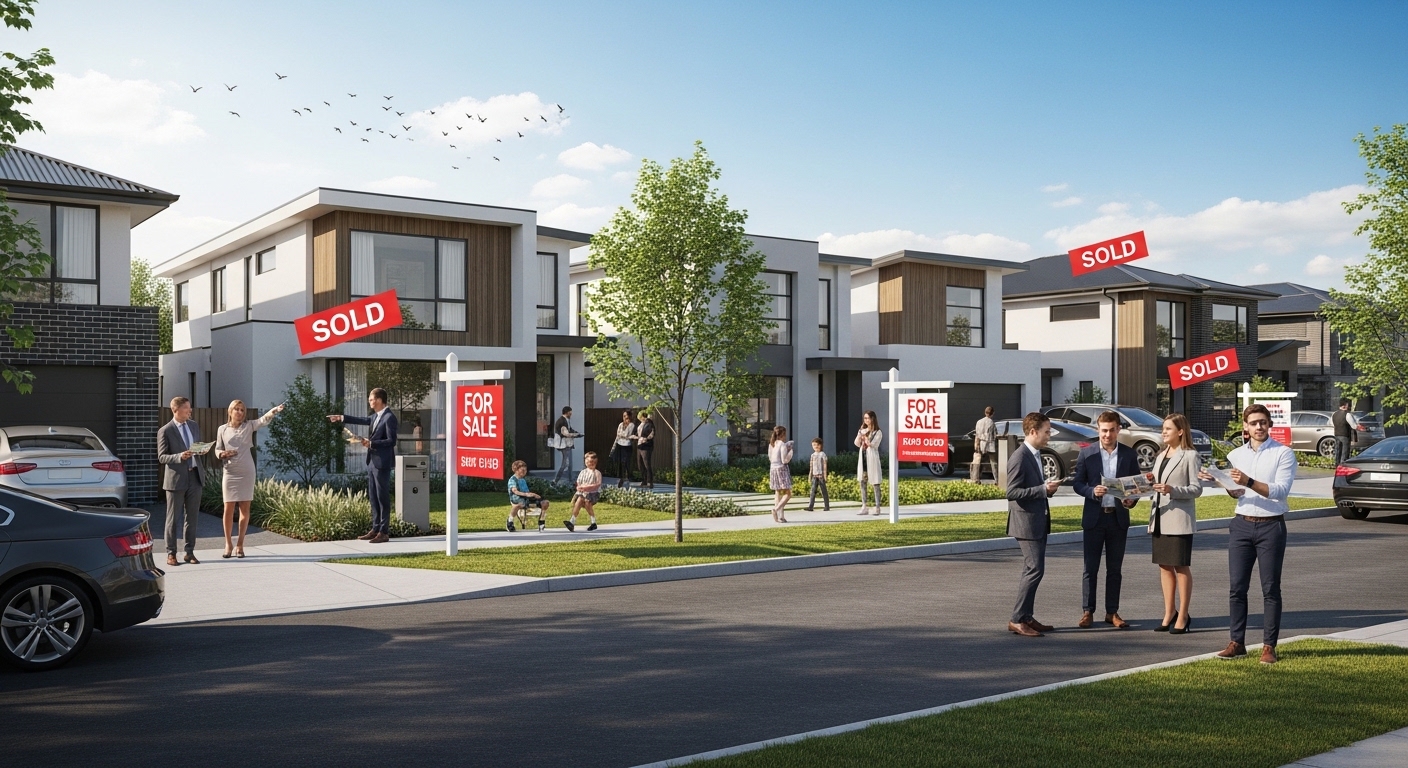
The property market has shown surprising resilience in 2026, performing far better than many analysts predicted. Despite rising interest rates, inflation concerns, and economic uncertainty, buyer confidence and transaction activity remain steady.
This trend suggests that the housing sector is adapting to challenges rather than collapsing under pressure.
Market Stability Defies Expectations
Recent industry research indicates that the property market is far less affected by economic conditions than expected.
A key finding shows that:
- Over 50% of active buyers are purchasing with cash, reducing reliance on mortgages
- Many buyers remain committed to moving, regardless of interest rate changes
- A majority expect to complete transactions within six months
This highlights a strong level of confidence among buyers, even in a changing financial environment.
Why the Property Market Is Holding Strong
Several factors are helping maintain stability in the housing sector:
1. Rise of Cash Buyers
Cash buyers are playing a major role in keeping the market active. Since they are not affected by mortgage rate fluctuations, their purchasing power remains stable.
2. Determined Buyers and Sellers
Industry insights suggest that many buyers have already made firm decisions. Instead of waiting for perfect conditions, they are moving forward with purchases.
This creates consistent demand and prevents major slowdowns.
3. Income Growth Supporting Affordability
In many cases, wage growth is beginning to outpace house price increases, improving affordability over time.
Experts note that this trend could gradually strengthen the market rather than weaken it.
4. Gradual Market Adjustment (Not a Crash)
Rather than experiencing a sharp decline, the property market is going through a slow and steady adjustment phase.
Forecasts suggest:
- Moderate price growth of around 2–3% annually
- Stabilization instead of dramatic fluctuations
Interest Rates Still a Key Factor
While the market is stable, rising mortgage rates continue to influence buyer behavior.
- Higher borrowing costs are slowing price growth
- Some buyers are becoming more cautious
- Demand is shifting toward more affordable properties
However, the presence of cash buyers and committed movers is balancing these effects.
A Shift Toward a More Balanced Market
The current conditions are creating a more balanced property market:
- Buyers have more negotiating power
- Sellers are setting more realistic prices
- Transactions are still happening at a steady pace
This is not a downturn—it’s a normalization after years of rapid growth.
What This Means for Buyers and Sellers
For Buyers:
- More choice and less competition
- Opportunity to negotiate better deals
- Improved affordability over time
For Sellers:
- Need for realistic pricing
- Importance of strong marketing
- Continued demand from serious buyers
Industry Insight: Confidence Remains High
Property experts emphasize that the market is not reacting dramatically to economic pressures.
Instead, it is showing resilience and adaptability, with buyers and sellers continuing to transact despite uncertainty.
The Bigger Picture for 2026
Even with global economic challenges, the housing market is expected to:
- Remain stable rather than volatile
- Experience gradual growth
- Continue attracting committed buyers
This aligns with broader forecasts of a slow but steady recovery phase rather than a sharp decline.
Final Thoughts
The idea that the property market would be heavily “rattled” by economic conditions has not materialized.
👉 The key takeaway:
The property market is more resilient than expected, driven by cash buyers, strong demand, and gradual economic adjustments.
For both buyers and sellers, this creates a stable environment with new opportunities in 2026.